
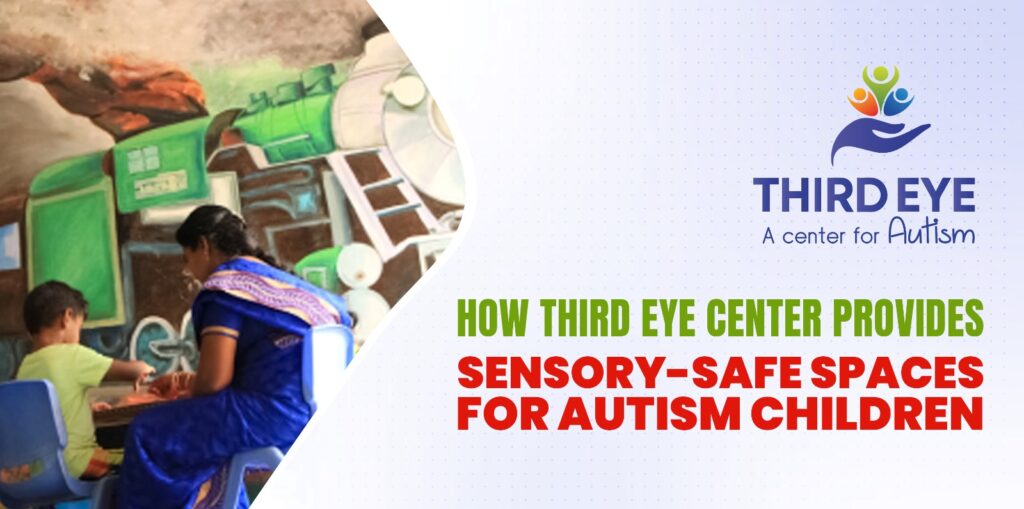
Instead of seeing, hearing, tasting, touching and smelling the world like other children autistic children might be feeling it completely differently. The blazing fluorescent bulbs, unending noise, over stimulating surroundings, overpowering smell and sudden change in plans can be more than they can take. We at the Third Eye Center hope to help offer safe sensory environments for children with autism so that they can feel comfortable and safe and come and thrive.
Table of Contents
ToggleWhat is a sensory-safe space?
Sensory-safe space is a supportive environment constructed to reduce sensory overload with the purpose of calming and facilitating children. It aids in calming down children and lets them relax and participate with greater ease.
Sensory-safe environments are incorporated within the daily intervention programs at Third Eye Center.
Why Sensory-Safe Spaces Are Important for Autism Children
Sensory processing difficulties are believed to be prevalent amongst many of the children with autism. These children can either be overly sensitive or have a reduced response to sensory stimuli.
What are The Benefits of Sensory-Safe Spaces
- Improves concentration and attention
- Supports emotional regulation
- Encourages participation in activities
- Promotes positive behavior
- Provides better communication and social interaction
- Provides a sense of security.
These advantages support children‘s ability to participate more freely in sessions.
How Third Eye Center Creates Sensory-Safe Environments
Third eye center designs spaces around a child-centered approach by acknowledging differing sensory preferences and developmental levels.
| Sensory Feature | Purpose | Benefits |
|---|---|---|
| Soft Lighting | Reduces visual overstimulation | Creates a calming atmosphere |
| Quiet Therapy Rooms | Minimizes noise distractions | Improves focus and learning |
| Sensory Equipment | Supports sensory regulation | Enhances engagement |
| Comfortable Seating | Provides physical comfort | Encourages participation |
| Structured Layouts | Reduces confusion | Promotes independence |
| Calm Corners | Helps children self-regulate | Reduces emotional distress |
| Visual Supports | Improves understanding | Enhances communication |
| Safe Play Areas | Encourages exploration | Builds confidence |
Sensory Integration Activities at Third Eye Center
Sensory integration activities assist the child in being able to process information in the senses more efficiently and respond more appropriately to the environment.
Common Sensory Activities
- Swing therapy
- Balance exercises
- Tactile play activities
- Deep pressure activities
- Movement-based exercises
- Fine motor skill activities
- Visual tracking exercises
- Interactive sensory games
Children can also learn to cope with sensory challenges and regulate themselves better by doing these things.
Discover additional programs and classes available through the Third Eye Center Programs.
Making a Calm Learning Environment
Children learn more effectively when they are in a safe environment which provides structure. At the Third Eye Center significant time is devoted to creating an structured (integrative) environment which is limited in potential distractions.
Features of a Calm Learning Environment
- Consistent daily routines
- Visual schedules
- Organized classrooms
- Individualized learning plans
- Flexible sensory breaks
These techniques enable kids to maintain their focus and develop a belief in their own skills.
Emotional Regulation and Sensory Support
Children with autism may have difficulties expressing their emotions when too much sensory input leads to overload. Through sensory-safe environments children have opportunities to relax and rebalance their emotions.
Emotional Support Strategies
- Quiet relaxation areas
- Guided breathing exercises
- Sensory breaks
- Visual calming tools
- Individual support sessions
- Positive behavior reinforcement
This provides children with ways of dealing with difficult situations that they can use at the center as well as at home.
Further information regarding sensory processing and autism can be obtained by Autism Speaks.
Parent Involvement in Sensory Development
Third Eye Center recognizes that parents are an extremely important part of the sensory development process. Families are provided with information on how to promote sensory awareness and a sensory rich environment at home and how to incorporate time frames and strategies used in therapy.
Parents are encouraged to:
- Follow consistent routines
- Make A place where u feel chilled in your house
- Use sensory tools appropriately
- Monitor sensory triggers
- Collaborate with therapists
- Encourage positive coping strategies
Families can contact us for support and further consultation through the Contact Us page.
How Sensory-Safe Spaces Improve Long-Term Development
Children who are in a safe and engaging environment are more likely to actively participate in therapy, communicate with those around them, establish social relationships and become autonomous. Sensory-safe spaces are the basis upon which growth can occur in many different areas of development.
Within the Third Eye Center we combine sensory-friendly environments along with evidence-based treatments to help children reach their potential and improve their quality of life.
Conclusion
Sensory-safe spaces are a critical part of the autism intervention and treatment. With a thoughtfully designed, calming and organized space Third Eye Center helps children to overcome either sensory ‘overloaded’ states and feel safe and confident to learn. With targeted sensory integration programs, customized support and active involvement of families, children are encouraged to come through barriers and develop skills of everyday life.
FAQ
1. What does a sensory-safe space for autistic children mean?
What is a sensory safe spaces that have been carefully devised by an enlightened adult so they are unlikely to be over stimulated providing a place where they can be safe and relaxed
2. How does The Third Eye Center take care of sensory needs?
The Third Eye Center offers sensory-friendly treatment rooms, sensory integration pursuits, silent rooms and personal support programs to support every child.
3. What sensory challenges are common for autistic children?
Some children are sensitive to certain sound, light, sensation, odor or even motion that affects how they learn and act.
4. How do sensory integration activities help autistic children?
They help the child to more efficiently locate sensory stimuli, facilitate self-regulation and generalizes to increased engagement in activities of daily life.
5. Can parents create sensory-safe spaces at home?
Yes. Parents can establish quiet space, keep routines, minimize sensory overloads, and collaborate with therapists for their children‘s sensory requirements.