
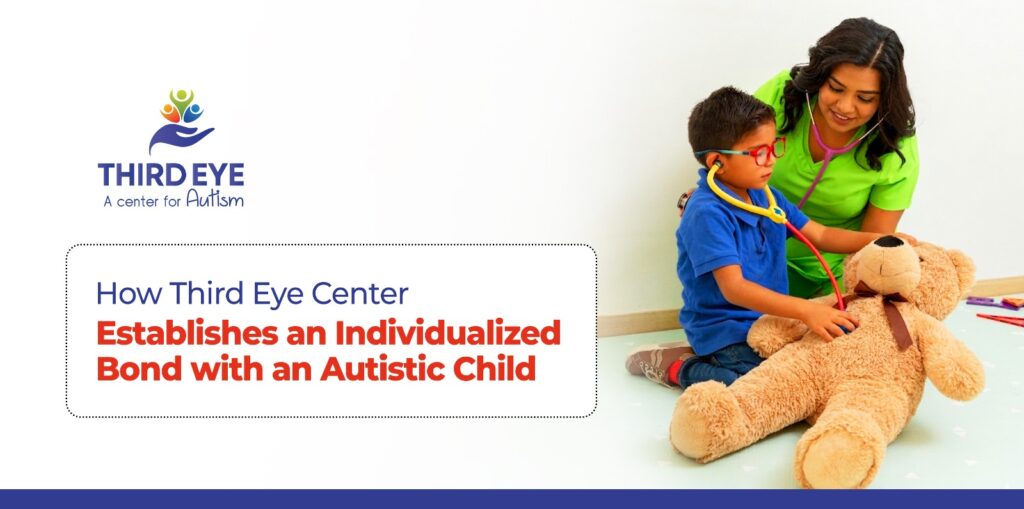
All children with autism are different. Some just speak while some express themselves by using actions, sounds, feelings or behaviours. It is crucial to know these differences and to foster trust connections with emotional involvement. At Third Eye Center, an individualized relationship with each autistic child is said to be one of the most essential elements of therapy and education.
The center will seek to understand the personality traits and interests, comfort level, communication style and emotional needs of each child as opposed to the same with each child. This one-on-one component of schooling creates feelings of safety, understanding and confidence in the classroom for the child.
Table of Contents
ToggleWhy is it Important for Autistic Children that they have Individual Bonding Time?
Autistic children have a variety of peculiar perceptions about the world. Stress or anxiety can be caused by loud noises, sudden changes, unfamiliar people or difficulties with communication. It is for this reason that foundations for learning and development are established through emotional trust.
A child who feels supported and emotionally connected with their therapists, teachers or caregivers will be more likely to:
- Participate in activities
- Express emotions comfortably
- Improve communication skills
- Build social confidence
- Easily learn new routines
- Develop independence gradually
At Third Eye Center, professionals know that if the child feels emotionally secure they benefit from therapy.
A Dual Perspective on Child Development is Adopted by Third Eye Center
The Third Eye Center recognizes the child from two angles.
The team carefully observes and learns about the child before starting therapies and intervention programs.
Areas They Focus On
| Observation Area | Purpose |
|---|---|
| Verbal and non-verbal communication | To understand communication patterns |
| Interests & Hobbies | To leverage interests & hobbies to engage students |
| Sensory Preferences | To steer clear of triggers and find comfort |
| Stress Signs and Soothing Strategies | Recognize signs of stress and soothing strategies |
| Science Achievement | To develop individual teaching approaches |
| Speech and language skills | To enhance the quality of social interactions progressively |
This unique insight assists the team in developing an environment which is supportive and tailored specifically for each child.
Building Trust through Care and Patience
A lot of autistic children require time to adjust to new surroundings and individuals. Therapists and educators at Third Eye Center emphasize patience rather than pressure.
The Method of Bonding They use are:
- Speaking in a quiet voice and subdued manner
- Providing sufficient amount of individual space
- Giving the child time to react response
- Play with familiar toys and activities
- Anytime you can get someone to look you in the eye without becoming intrusive, play it safe
- Recognizing and celebrating anything that is achieved
This approach to discussion was slow and respectful, because it helps the child to feel safe emotionally.
Make a Connection with Students by Leveraging Interests
Interest-based interaction is one of the effective interactions adopted at Third Eye Center. Each child has a favorite, such as:
- Drawing
- Music
- Puzzles
- Building blocks
- Storytelling
- Sensory toys
- Numbers or alphabets
Therapists leverage these interests as a means to initiate communication and engagement. In activities they enjoy, children will naturally feel more comfortable with therapists and teachers.
For example:
- A child that is interested in music will respond better in music sessions
- For a child who likes solving puzzles, communication can occur more with problem solving
- Kids enjoy colors; they can be very involved in art therapy
This approach builds emotional relationships and contributes to development objectives.
Importance of Consistency in Bonding
It is very important to be consistent with an autistic child. Major shifts can cause anxiety or confusion. At Third Eye Center, structure facilitates children to feel safe.
Consistency includes:
- Regular therapy schedules
- Familiar therapists/educators
- Predictable classroom routines
- Repeated positive reinforcement
- Structured communication methods
Through this constant, trust and emotional connection will develop over time.z
Families are Finding Ways to Bond with Their Infants
Parenting, along with a child’s emotional skill development, is significant. Third Eye Center encourages parents to actively participate in therapy and learning activities.
Some of the Activities of Parents Involve Supporting:
- Counseling sessions
- Home guidance programs
- Behavioral support training
- Communication improvement techniques
- Emotional management strategies
The collaboration between therapists and parents forms a stable support system that helps to promote the child’s wellbeing, both in the home and in the center.
Therapies Supporting Emotional Bonding:
Different therapies are employed here at Third Eye Center for not only developmental improvement, but to bring emotional connection.
Typical Therapies Consist of:
- Speech Therapy
- Occupational Therapy
- Behavioral Therapy
- Sensory Integration Therapy
- Social Skills Training
- Play-Based Learning
The therapies are modified in each child’s comfort level and individual needs.
To learn more about autism therapies you can check out:
- utism Speaks
- CDC Autism Information
- National Autistic Society
- WHO Autism Awareness
- UNICEF Child Development Resources
Internal Resources from Third Eye Center
Get to know Third Eye Center’s services and programs more deeply:
- Autism Therapy Programs
- Special Education Support
- Child Development Services
Here are Some Indicators that a Strong Bond is Forming
As time goes on child learners start to demonstrate emotional warmth and trust.
There can be positive signs such as:
- Smiling during sessions
- Initiating interaction
- Reduced anxiety
- Better participation
- Improved communication
- Increased confidence
- Comfortable body language
The changes these improvements bring make significant developmental strides for life.
Conclusion
Creating an emotional bond with an autistic child is a long and difficult process that educators must learn to be patient, loving, consistent and compassionate with the patience to understand the child. At Third Eye Center, each child is regarded as a unique individual with their own strengths and needs. The center provides an environment in which children can learn to trust, be confident, communicate, and regulate their emotions.
FAQs
1. Why is the development of bonds significant for autistic kids?
Bonding creates a sense of comfort for autistic children so as to enhance communication, learning and social interaction.
2. How does Third Eye Center personalize therapy?
They observe and review the behavior, communication, interests, sensory preferences, and emotions of the individual child first to develop therapy plans.
3. Are there parental involvement in therapy sessions?
Yes. Involvement of parents is facilitated through support in counselling, at home support and ongoing contact with therapists.
4. What treatments do Third Eye Center offer?
The center provides training in social skills, behavioral therapy, speech, occupational, and sensory therapy.
5. How long will it take the child to gain trust?
All children are unique. Bonding can happen very rapidly for some kids and may take longer and particularly patience for others, depending on how comfortable they are with the person and their communication skills.