
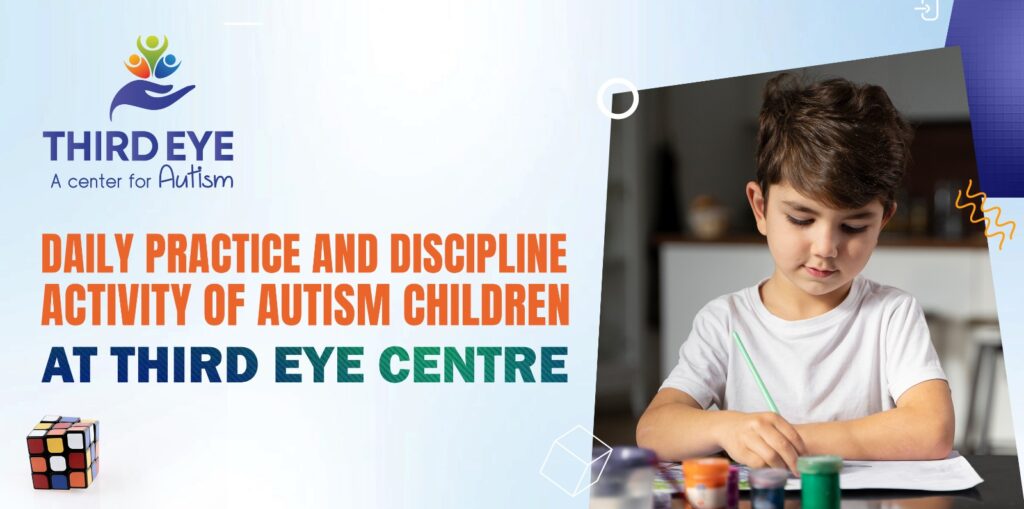
Autism children do best when they have a regular scheduled everyday routine. Active participation in structured discipline exercises teaches them to acquire communication skills. It enables them to communicate with other people and appropriate behavior, discipline and promote their social interaction, independence, self-control, emotional regulation and confidence. At the Third Eye Centre, each child is carried out through specialized programming, special education, behavioral modification, communication and social skills training and life skills education. The aim is to help each child learn in the way they are best equipped to learn.
Table of Contents
ToggleWhy Daily Routine is Important for Autism Children
Children with ASD tend to be more at ease when they are engaged in routine activities. Having a systematic routine can ease anxiety and increase learning. Daily scheduled discipline activities also promote a sense of security and reinforce good behavior.
Benefits of Daily Practice
- Improves communication skills
- Enhances social interaction
- Develops self-help skills
- Encourages independence
- Improves concentration and focus
- Reduces challenging behaviors
- Builds confidence and self-esteem
- Strengthens emotional regulation
Within every child‘s Individual Development Program, at the initial autism programming program at Third Eye Centre, goals are set related to typical development in the areas of communication, behavior, social skills, sensory development, and life skills acquisition.
Daily Practice Activities at Third Eye Centre
The schedule over the course of the day at the Third Eye Centre is set up to ensure that children are kept involved and motivated and to also ensure that the children have a wide range of structured learning experience.
| Activity | Purpose | Benefits |
|---|---|---|
| Morning Greeting Sessions | Social interaction | Enhances communication and eye contact |
| Communication Training | Speech and language development | Improves verbal and non-verbal communication |
| Social Skills Activities | Group interaction | Builds friendships and teamwork |
| Occupational Therapy Activities | Motor development | Improves coordination and independence |
| Sensory Integration Sessions | Sensory regulation | Reduces sensory challenges |
| Behavioral Training | Positive behavior reinforcement | Encourages discipline and self-control |
| Play-Based Learning | Learning through activities | Improves creativity and engagement |
| Life Skills Training | Daily living skills | Promotes independence |
Communication Development Activities
Communication is a prominent focus area at Third Eye Centre and children engage in activities which help them to communicate their needs, wants, thoughts and feelings.
Communication Activities Include
- Picture exchange communication
- Vocabulary development exercises
- Speech therapy sessions
- Listening activities
- Storytelling sessions
- Group conversations
- Interactive games
In addition, these activities support the child‘s expressive and receptive communication. And, parents can find helpful information about how to facilitate communication development on the Autism Speaks website.
Discipline and Behavioral Development
Discipline is learned by positive reinforcement and rigid systems. Children learn measured behaviors through reinforcement and correction.
Discipline Activities
- Following classroom rules
- Completing assigned tasks
- Following instructions
- Maintaining personal hygiene
- Organizing personal belongings
- Participating in group activities
When based on ABA principals applied behavioral analysis techniques can teach new positive behaviors to help children replace difficult behaviors. Find more information about behavioral support for autism through the CDC Autism Information Center.
Social Skills Training
For all children, social interaction is important. The third eye centre gives the children the chance to develop their social behaviors in a caring and encouraging way.
Social Skills Activities
- Group games
- Peer interaction sessions
- Role-playing activities
- Sharing and cooperation exercises
- Team-building activities
- Community participation programs
These activities enable children to learn about social norms and form bonds with others.
Life Skills and Independence Training
Fostering independence is one of the primary goals of an autism school. Life skills training ensures that school children are ready for everyday living.
Life Skills Practiced Daily
- Dressing independently
- Eating independently
- Personal hygiene routines
- Organizing belongings
- Following schedules
- Basic household responsibilities
- Safety awareness
How Parents Benefit from Structured Programs
At Third Eye Centre involvement and support by the parent is also reinforced. A home program is provided and parents are trained to follow through with development activities in the home environment. Finally, if families want further individual support they can access the team through the Contact Us page.
Conclusion
Autistic children need to practice everyday and require discipline activities. Third Eye Centre provides a very comprehensive home for autistic children including speech training, group activities, discipline activities, functional curriculum and life skill training. This center has provided unconditional support to these children so that the children are able to grow academically, socially and emotionally. With steady practice and training, these autistic children are able to grow more independent and happier.
Frequently Asked Questions
1. Why are daily routines important for autistic children?
The predictability of routines help reduce anxiety and improve learning and behavioral regicts. According to the WHO (World Health Organization) routine can greatly improve developmental outcomes.
2. What discipline activities are practiced at Third Eye Centre?
Classroom routines (learning to sit at a table, complete tasks, take turns, know the daily routine, self care, and manage positive behavior) are taught through structured activities at Third Eye Centre.
3. How does Third Eye Centre improve communication skills?
The centre offers speech therapy, communication training, story telling, interactive game and social interaction training using its autism intervention program.
4. What life skills are taught to autistic children?
The children develop skills to dress, eat, for hygiene, organization, safety and independent living.
5. How can parents support their child‘s progress at home?
Throughout counselling, parents will implement routines, communicative activities, receive feedback on successful behaviors, and work together with therapists.